Frequently Asked Questions
The Bridge Center for Hope is the first adult crisis-receiving facility in East Baton Rouge Parish—and the first of its kind in Louisiana. We provide short term crisis stabilization for adults 18 and older experiencing a mental health or substance use crisis.

to provide the crisis care you need when you need us most—always open, always here
I Need Help
Watch our explainer videos to learn more about how the Bridge Center can help you if you’re facing a mental health or substance use crisis.
Why Choose The Bridge Center in Crisis
How Can We Help?
The Bridge Center offers a full range of short-term crisis services. Think of it as urgent care for the mind—a safe place to stabilize, recover, and begin the next step toward healing.


Helping Others in Crisis
If someone you care about is struggling with a mental health or substance use crisis, it can feel overwhelming—but you are not alone. The Bridge Center is here to help.
Short answer, yes. However, the guest (individual) receiving services must give written authorization to the facility staff before any information is provided. This may include but is not limited to admission status, treatment, and discharge planning.
However, the guest receiving services must give written authorization to the facility staff if it applies to the individualized treatment plan.
When a guest enters the facility on an Order of Protective Custody (OPC), the facility staff will contact the affiant (someone who files an affidavit) for collateral information to aid in the treatment process.
What Should You Do If Someone You Know Is In Crisis?
How Does the Bridge Center Work?
Admission, Costs & Services
At the Bridge Center for Hope, no one is turned away, regardless of income, ability to pay or insurance coverage. The facility accepts all forms of insurance. We also admit EBR residents who do not have insurance coverage.
The 2018 tax passage will provide services for East Baton Rouge Parish residents people who are uninsured or can’t afford care. Recovery Innovations, the facility service provider, is contracted with all Managed Care Organizations (MCOs) to cover all Medicaid recipients in addition to the contract with The Bridge Center for Hope to cover uninsured individuals of East Baton Rouge Parish in need of services.
Formal voluntary admissions mean the admission of a person suffering from mental illness or substance-related or addictive disorder desiring admission to a treatment facility for diagnosis or treatment of such condition, which may be formally admitted upon his/her written request.
At any point during the treatment process, an individual who was initially admitted to the facility on an Order of Protective Custody (OPC) can be changed to an FVA.
This is an individual treatment plan based on medical necessity. The majority of individuals are stabilized within the first 23-hours. Individuals who require more extended stabilization may stay one to five days.
Co-occurring disorders may include any combination of two or more substance use disorders and mental or behavioral health conditions.
Because mental health and substance use disorders are co-occurring, people with mental health issues are more likely to experience a substance use disorder than those not affected by a mental illness.
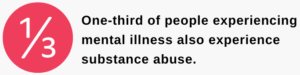
In fact, about a third of all people experiencing mental illnesses and about half of people living with severe mental illnesses also experience substance abuse. But integrating both screening and treatment for mental and substance use disorders can lead to a better quality of care and health outcomes for those living with co-occurring disorders. Treating both conditions at the same time helps facilitate recovery.
Guests brought in by Order of Protective Custody (OPC) are assessed by nurses, licensed mental health professionals, psychiatric nurse practitioners, or psychiatrists to determine if the individual meets one of the three criteria: a danger to self, others, or gravely ill. If one of the three criteria applies, the treating physician issues a physician emergency certificate, and the guest remains involuntary committed.
Guest treated for substance use issues typically stay three to five days and follow a medical detoxification protocol.
Recovery Innovations
In 2019, The Bridge Center for Hope Board of Directors selected Recovery Innovations through a solicitation of proposal process to operate the facility. RI International and its employees provide all services for The Bridge Center for Hope. Executive Director Charlotte Claiborne and The Bridge Center for Hope Board of Directors provide oversight of the contract between The Bridge Center for Hope and Recovery Innovations.
Recovery Innovations, the service provider chosen by the Bridge Center Board of Directors, is an international non-profit behavioral health organization that provides a range of mental health, substance use, and crisis services since 1990 throughout the United States and abroad. Recovery Innovations was chosen to operate The Bridge Center for Hope facility.
Discharge & Next Steps
Before discharge, all guests are scheduled for an outpatient provider appointment, a physical health appointment, and given additional resource information.
Family members and natural supports* are encouraged to be a part of the guest treatment process when applicable to the guest treatment plan and with the guest's written consent.
*Natural Supports is defined as personal associations and relationships typically developed in the community that enhance the quality and security of life for people, including, but not limited to, family and friends.
Discharge against medical advice (AMA), in which a patient chooses to leave the facility before the treating physician recommends discharge.
Upon the discharge planning process, the Bridge Center will assist in securing temporary housing [residential treatment facility, group homes, shelters].
The Bridge Center has many community resources. Guests are discharged to an appropriate level of care throughout the community.
Guests are transferred to another facility if they have urgent or emergent medical complications.